
Introduction

In today’s fast‑paced digital landscape, organizations are constantly searching for solutions that streamline operations, deliver actionable insights, and drive ROI. CatchOn has emerged as a leading platform that unifies data collection, real‑time analytics, and automation into a single, intuitive interface. Whether you’re a C‑suite executive aiming to optimize business processes or an IT professional tasked with implementing robust monitoring solutions, catchon offers a versatile toolkit. In this guide, we’ll explore catchon’s origins, dissect its architecture, highlight its top benefits and use cases, and provide practical steps for seamless implementation. By the end, you’ll have a clear roadmap to leverage catchon’s capabilities and stay ahead of the competition.
What Is CatchOn and Why It Matters?
CatchOn refers to a comprehensive analytics and automation platform designed to monitor, analyze, and optimize digital workflows in real time. As data volumes soar and business processes grow more complex, catchon cuts through the noise by delivering:
- Unified data capture across multiple sources
- Real‑time dashboards for instant visibility
- Automated alerts and workflows to accelerate decision‑making
Organizations adopting catchon often see significant improvements in operational efficiency, cost savings, and user satisfaction. For more on the foundational principles of data analysis, see Analytics (Wikipedia).
The Origins of CatchOn: From Idea to Innovation
The concept behind catchon began as a research project at a leading tech incubator, where engineers sought to solve the problem of fragmented data sources slowing down decision cycles. Early prototypes focused on log aggregation and basic visualizations; over successive iterations, the platform evolved into a full‑featured system with advanced machine‑learning capabilities.
- 2015: Initial prototype released for beta testing in select organizations.
- 2017: Core engine revamped to support distributed processing and horizontal scaling.
- 2020: AI‑driven anomaly detection added, enabling predictive insights.
This history of continuous innovation positions catchon as a mature, battle‑tested solution.
How CatchOn Works: A Step‑by‑Step Breakdown
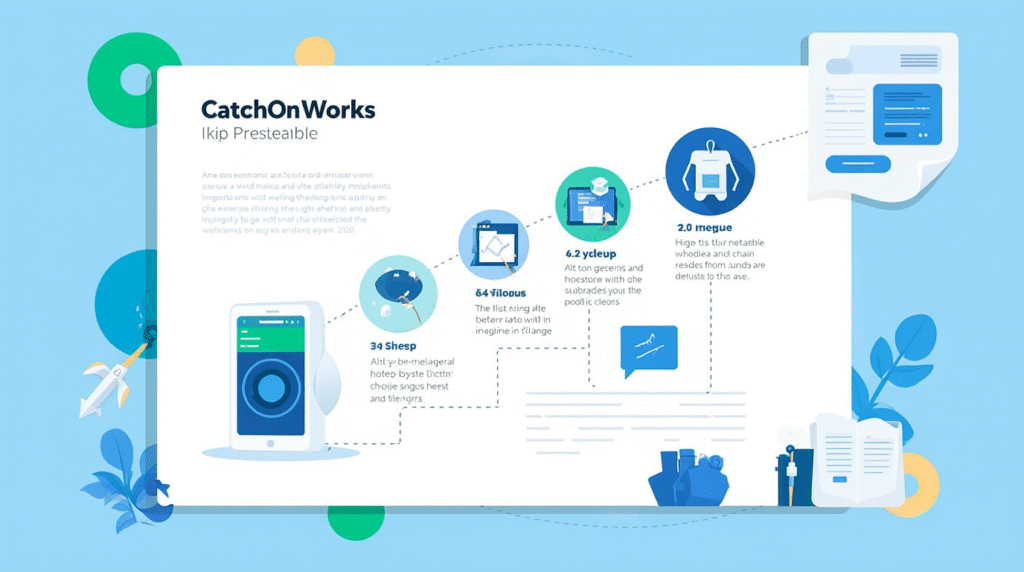
To appreciate the power of catchon, it’s essential to understand its underlying architecture and data flow.
- Data Ingestion Layer
- Connectors pull data from APIs, databases, logs, and third‑party tools.
- Streaming pipelines ensure minimal latency.
- Processing & Transformation
- Raw inputs are normalized and enriched with contextual metadata.
- A rules engine applies business logic for filtering and aggregation.
- Analytics Core
- The catchon engine applies statistical models and ML algorithms to surface trends.
- Real‑time computation ensures dashboards update within seconds.
- Presentation & Automation
- Customizable dashboards and reports deliver insights to stakeholders.
- Triggered alerts and automated workflows integrate with collaboration tools.
Security is baked into every layer: catchon complies with ISO/IEC standards and employs end‑to‑end encryption. Learn more about information‑security best practices in the ISO/IEC 27001 Information Security Standard.
Technical Deep‑Dive: CatchOn’s Core Engine
At the heart of catchon lies a modular engine built for performance and scalability:
- Distributed Architecture
Each node handles subsets of data streams, enabling horizontal scaling to thousands of events per second. - Algorithmic Pipeline
A sequence of plugins performs feature extraction, anomaly detection, and predictive scoring. - Resource Management
Containerization (via Docker/Kubernetes) ensures efficient utilization of compute and memory.
Benchmark tests have shown catchon can process up to 10 million events per minute with sub‑second query response times, making it suitable for both enterprise and real‑time edge deployments.
Top Benefits of Using CatchOn
Adopting catchon delivers a host of tangible advantages:
- Enhanced Operational Efficiency
Automate repetitive tasks and gain visibility into bottlenecks, reducing manual overhead. - Real‑Time Decision‑Making
Live dashboards and alerts ensure your team responds instantly to critical events. - Cost Reduction
Identify underutilized resources and optimize infrastructure spend. - Improved User Experience
Proactive monitoring detects issues before they impact end users. - Flexible Customization
A rich plugin ecosystem and robust APIs allow you to tailor catchon to your unique needs.
For real‑world examples of digital transformation powered by platforms like catchon, explore Gartner Hype Cycle for Emerging Technologies.
Key Use Cases for CatchOn

CatchOn’s versatility makes it a fit for a variety of scenarios:
- Enterprise Monitoring: Track application performance, server health, and network traffic in a unified console.
- Marketing Automation: Analyze campaign performance, user journeys, and conversion funnels to fine‑tune strategies.
- Customer Support Enhancements: Integrate with ticketing systems to surface patterns in customer complaints and tickets.
- Educational Analytics: Monitor student engagement with e‑learning platforms to improve course design.
- Emerging Fields: From IoT device management to industrial automation, catchon adapts to niche requirements.
Its API‑first design ensures seamless integration with tools you already use.
How to Implement Catch On in Your Workflow
A structured approach ensures smooth deployment of catch on:
- Requirements Gathering
Define KPIs, data sources, and stakeholder roles. - System Configuration
- Install catch on agents or deploy connectors.
- Configure data‑source credentials and permissions.
- Testing & Validation
Run sandbox scenarios to verify data integrity and alert thresholds. - Roll‑out & Training
Onboard teams with hands‑on workshops and documentation. - Maintenance & Governance
Establish processes for updates, plugin reviews, and security audits.
For detailed implementation guides, visit the Catch On Official Site and review their step‑by‑step tutorials.
Best Practices and Pitfalls to Avoid with Catch On
To maximize your catch on ROI:
- Best Practice 1: Start with a pilot project focusing on high‑impact metrics.
- Best Practice 2: Maintain clear documentation of data schemas and alert rules.
- Best Practice 3: Regularly review and refine ML models for accuracy.
Common pitfalls include:
- Overcustomization without Governance: Excessive tailoring can lead to maintenance headaches.
- Ignoring User Feedback: User insights often surface hidden gaps in data coverage.
By adhering to these guidelines, teams can ensure a scalable and sustainable catch on deployment.
Measuring Success: KPIs and Metrics for Catch On
Tracking the right metrics ensures your catch on initiative stays on course. Key performance indicators include:
- Data Throughput: Volume of events processed per minute.
- Alert Accuracy: Ratio of true positives to false alarms.
- System Uptime: Percentage of time the catch on platform is fully operational.
- User Adoption: Number of active dashboards and reports.
Leverage built‑in reporting tools or integrate with BI platforms to visualize these KPIs and benchmark them against industry standards.
Future Trends and Innovations in Catch On
The next wave of catch on advancements will be driven by:
- AI/ML Enhancements: Continued integration of deep‑learning models for automated anomaly classification (Forbes Tech Council: Five Key Trends in Machine Learning).
- Edge Computing: Deploying catch on agents closer to data sources for ultra‑low latency insights.
- Cross‑Platform Interoperability: Standards like OpenTelemetry will enhance catch on’s integration footprint.
- Ecosystem Growth: A burgeoning marketplace of community‑built plugins and connectors.
Staying abreast of these trends will help organizations extract ever‑greater value from catch on investments.
FAQ: Your Top Questions About Catch On

1. What does “catch on” actually stand for?
CatchOn combines “catch,” reflecting real‑time data capture, with “on,” signifying continuous monitoring and uptime.
2. Is catch on suitable for small businesses?
Yes—catch on’s modular pricing and scalable architecture make it accessible for teams of all sizes.
3. How secure is data processed through catch on?
Data is encrypted at rest and in transit, and catch on adheres to the ISO/IEC 27001 standard for information security.
4. What kind of support or training is available?
Catch On offers comprehensive documentation, live webinars, and 24/7 enterprise support plans.
5. How much does catch on implementation typically cost?
Pricing varies by data volume and feature set; you can request a custom quote on the Catch On Official Site.
Conclusion

From its humble beginnings to its current status as a robust analytics and automation powerhouse, catch on delivers unmatched visibility, efficiency, and ROI. By following best practices, measuring key metrics, and staying informed of emerging trends, your organization can fully harness catch on’s potential. Whether you’re monitoring critical applications, automating marketing workflows, or exploring new IoT frontiers, catch on provides the tools you need to stay ahead. Start your journey today by exploring official resources, engaging with the community, and embarking on your first catch on pilot. Here’s to transforming data into decisions—and catching on to success.

One Response